Mystery Books For Elementary Readers

Last Tuesday my daughter looked up from her book and said "I know who took the necklace." She was reading a mystery. I was reading the same book to her at night. But she figured it out three chapters before the ending. I asked her how she knew. She pointed to a sentence on page forty seven. "The author put this here for a reason," she said.
That was the moment I realized mystery books do something special for young readers. They make kids think. They make kids pay attention. They make kids feel smart.
Why Mysteries Work So Well?
Think about how a child's mind works. They love questions. They love puzzles. They love proving they are right. Mystery books give them all of mystery books for elementary readers.
When my son reads a mystery, he does not just sit there. He leans forward. He reads slower. He goes back to check things. He argues with the characters when they miss something obvious. This is not passive reading. This is active reading. This is the kind of reading that sticks.
I have seen it in my own children. I have seen it in my students. The kids who read mysteries are the ones who ask better questions in class. They are the ones who notice when something does not add up. They are the ones who want to dig deeper.
What Makes a Mystery Good for Kids?

Not every mystery works. I learned this the hard way. I gave my seven year old a mystery book that was too hard. He got frustrated. He stopped reading. He said "this book is dumb." The book was not dumb. It was just wrong for him. Here is what I look for now when I pick mystery books for elementary readers.
Read Also: Mystery Books For Advanced 10 Year Olds
The Plot Needs to Be Straightforward
Kids do not need ten different suspects. They do not need five subplots. They need one clear problem and one clear solution. My daughter's favorite mysteries are simple. Something goes missing. Someone figures out what happened. The end. She does not care about complicated backstories. She cares about the puzzle.
The Words Need to Fit
This sounds obvious but it is easy to mess up. I once picked a book with great reviews. The mystery was clever. The characters were fun. But my son could not read half the words on the page. He spent more time sounding out words than solving the mystery. That defeats the whole purpose.
Now I check the reading level before I buy anything. I also do the five finger test. One page. Five unknown words. Too hard.
Short Chapters Keep Kids Going
My son has a short attention span. He is eight. Most eight year olds have short attention spans. Short chapters give him a place to stop. He can read one chapter and feel done. He does not have to commit to a huge chunk of text. This matters. When kids feel like they are making progress, they keep reading.
Pictures Still Matter
My daughter is in third grade. She reads chapter books. But she still likes pictures. The best mystery books for elementary readers have illustrations that add something. They show a clue the text does not mention. They show a character's face when they are lying. They show the scene so the child can look for details. I have watched my daughter stare at an illustration for a full minute. She was searching for something. She found it too. That picture gave her the answer.
The Ending Cannot Cheat
- This is my biggest pet peeve. Some mystery books pull a solution out of nowhere.
- A character we never met did it. A clue we never saw solves everything. A detail that was never mentioned becomes the key.
- Kids notice this. They feel cheated. They feel like they wasted their time.
- A good mystery plays fair. All the clues are there. The child could have solved it. They might not have. But they could have.
Books I Actually Recommend
I have read a lot of mystery books with my kids. These are the ones that worked.
For the Youngest Readers
Nate the Great
My son loved these books when he was in first grade. Nate solves cases in his neighborhood. The mysteries are small. A lost picture. A missing pancake. Nothing scary. The language is simple. The chapters are short. The pictures are fun. Nate eats pancakes in every book. My son thought that was hilarious.
Aunt Eater Loves a Mystery
This one is weird and wonderful. Aunt Eater is an anteater. She solves mysteries. The stories are gentle. Nothing bad ever really happens. My daughter read these in kindergarten. She could solve the cases herself. That made her feel like a genius.
Piggins
This is a beautiful book. The illustrations are detailed and lovely. Piggins is a pig who works as a butler. He solves a mystery at a fancy party. The language is richer than the other books on this list. I read this one aloud. My kids loved pointing at the pictures and finding clues.
For Older Elementary Readers
Encyclopedia Brown
These books are brilliant. Each one has about ten short mysteries. The reader gets all the clues. Then they can try to solve it themselves. The answers are in the back. My kids fight over who gets to guess first. They argue about who is right. They go back and read the clues again. This is the kind of engagement you want. They are not just reading. They are thinking. They are debating. They are proving their points.
The Westing Game
This one is for advanced readers. It won the Newbery Medal. It deserves it. Sixteen people are possible heirs to a fortune. Someone dies. Everyone is a suspect. The clues are clever. The ending is surprising but fair. My oldest read this in fourth grade. She reread it twice. She found new things each time.
Cam Jansen
- Cam has a photographic memory. She looks at something and remembers every detail. She uses this gift to solve mysteries.
- The books are fast paced. The mysteries are interesting. The language is accessible.
- My daughter read the whole series in a month. She could not stop.
Two Minute Mysteries
- These are short. Very short. Each mystery takes about two minutes to read.
- Perfect for bedtime. Perfect for classroom warm ups. Perfect for kids who do not have long attention spans.
- My son likes these because he can solve one and feel accomplished. Then he wants to do another one.
Sammy Keyes
- These books are modern and funny. Sammy is a girl detective. She solves mysteries in her town.
- The language is not too hard. The stories are engaging. My daughter relates to Sammy and her friends.
The Boxcar Children
- This series is old but good. Four children live in a boxcar. They solve mysteries together.
- The stories are wholesome. The mysteries are interesting but not scary. The language is clear.
- I read these when I was a kid. My kids read them too. They hold up..
You May Also Like: Fiction Books About Perseverance For Kids
What I Do With My Kids?
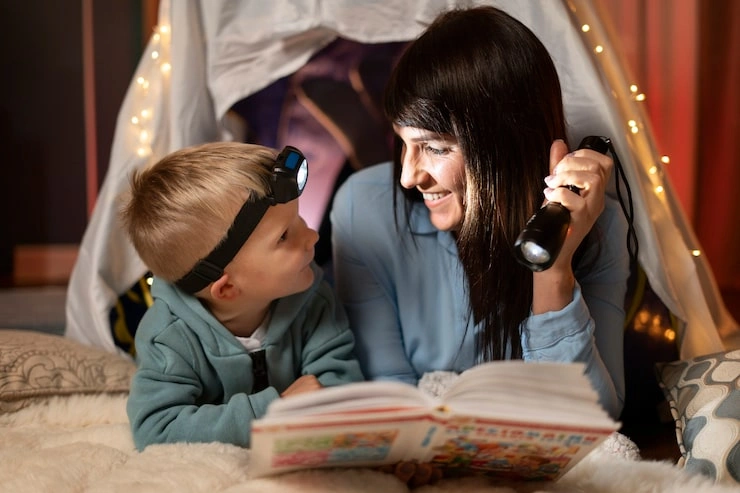
Reading a mystery is not just about the book. It is about what you do with it.
I Stop Before the Ending
- When I read aloud, I stop before the solution. I ask my kids what they think happened.
- Sometimes they are right. Sometimes they are wrong. Either way, they have to explain their thinking. They have to point to clues.
- This makes them active readers. They are not just listening. They are participating.
We Make Clue Charts
- We get a big piece of paper. We write down clues as we read. We draw lines between clues that connect.
- This helps my kids organize their thoughts. It also makes them feel like real detectives.
- My daughter loves this. She takes it very seriously. She uses different colored markers for different suspects.
Questions People Ask Me
Are Mystery Books Scary?
Most are not. The best ones for elementary readers are about puzzles, not fear. There is no real violence. The stakes are usually small.
If you are worried, read the book first. You will see it is fine.
My Child Guessed the Ending Early. Is That Bad?
No. That is great. It means they are paying attention. It means they are thinking like a detective.
Let them enjoy being right. Then ask them how they figured it out.
My Child Does Not Like Reading. Will Mysteries Help?
Yes. The suspense makes kids want to keep reading. They want to find the mystery books for elementary readers.
I have seen reluctant readers become mystery fans. The need to solve the puzzle pushes them through the book.
How Do I Pick the Right Level?
Use the five finger test. Have the child read one page. Put up a finger for every word they do not know.
Five fingers up. Too hard.
Zero or one fingers up. Too easy.
Two or three fingers up. Just right.
Do Mysteries Help With School Tests?
Yes. Reading tests ask kids to draw conclusions. They ask them to find evidence. They ask them to make predictions.
Mystery reading builds all of these skills. Kids who read mysteries often do better on these questions.
Building a Classroom Collection
I used to teach. Here is what I did with mystery books in my classroom.
I Started With Series
Series keep kids reading. Once they like one book, they want to read the next one.
I made sure I had the whole series. Nate the Great. Cam Jansen. Encyclopedia Brown.
I Included Different Levels
My classroom had readers at many levels. I made sure I had books for all of them.
Some kids were reading at first grade level. Others were at fifth grade level. Everyone had choices.
I Added Nonfiction
Kids love real mysteries too. Books about unsolved puzzles. Books about forensic science. Books about real detectives.
These appeal to kids who like facts. They also connect reading to the real world.
I Asked Students for Recommendations
Kids know what they like. I asked them to recommend mystery books to each other.
This built a reading community. It also helped me find books I did not know about.
I Made a Mystery Corner
I set up a special area for mystery books. I put up a sign that said Detective Agency. I added fake clues and magnifying glasses.
The kids loved it. They felt like they were in a special club.
How Mystery Reading Changes as Kids Grow?
A kindergartner reads simple picture book mysteries. A second grader reads early chapter books. A fifth grader reads longer, more complex stories.
This growth is natural. The key is to keep giving them books that challenge them without frustrating them.
As they get older, you can introduce different kinds of mysteries. You can compare authors. You can talk about what makes each one work.
This deeper understanding makes reading more interesting.
Final Thoughts
Mystery books changed how my kids read. They changed how my students read. Reading became active. Reading became fun. Reading became something they wanted to do. Start with the right book for your child. Read with them. Ask questions. Make it fun. Over time, you will see your child become a better thinker and a more confident reader. The recommendations in this guide are a good starting point. There are many more mystery books out there. Explore bookstores. Visit libraries. Talk to other parents and teachers. Find what works for your children.
Every child is different. Some will love books that others do not. That is fine. The goal is not to make every child love the same books. The goal is to make every child love reading. Mystery books are one of the best tools for reaching that goal. Pick a book from this list. Sit down with a young reader. Open the first page.